
CRAFT YOUR FUTURE WITH FERMENTATION SCIENCE - FROM BREAD TO BEER.
One of the few programs of its kind in the nation, OSU’s Fermentation Science program offers hands-on training in brewing, food fermentation, and flavor innovation. Explore the science behind beer, wine, cheese, bread, and more—while preparing for a career in this dynamic, growing field.
Fermentation Courses That Open Doors
Hands-on labs, industry-relevant topics, and real-world skills to launch your career.
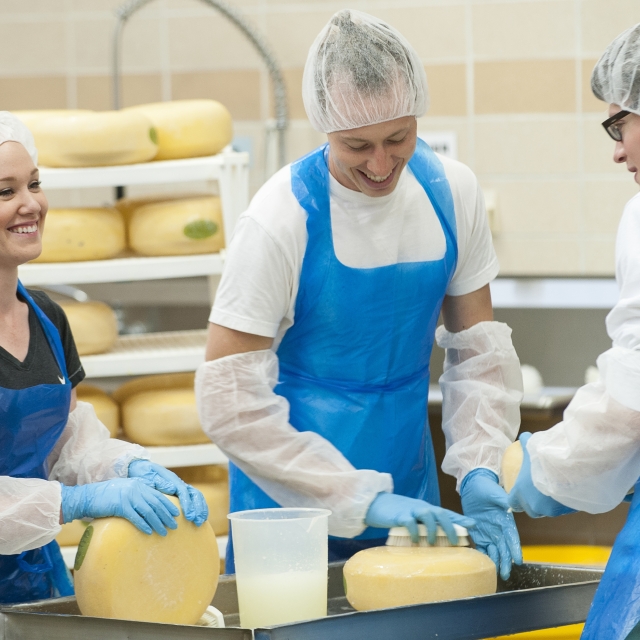
Oregon State’s Fermentation Science program is one of only a few in the nation—and it offers a uniquely hands-on, applied approach to learning. Students explore how microorganisms are used to create beer, wine, cheese, yogurt, bread, soy sauce, pickles, and other fermented foods that are part of cultures and cuisines around the world.
Through specialized courses, you'll dive into the biological, chemical, and physical foundations of fermentation, along with the engineering, processing, quality control, safety, and public health considerations that go into making fermented products. Whether you're passionate about craft brewing, sustainable food production, or food innovation, this program prepares you to lead in a fast-growing and flavor-forward field.
* Baccalaureate Core course. Applies to general education requirements for undergraduate students in a catalog year up to 2024-2025
+ Core Education course. Applies to general education requirements for undergraduate students in catalog year 2025-2026 and beyond
^ Writing Intensive Curriculum (WIC) course
1 Competitive selection and/or departmental approval required
2 Students may not earn internship credit in all states. Consult with internship coordinator for list of eligible states
Students may complete more than one option. Courses must be selected so that at least 12 credits in each option are counted uniquely toward requirements of that option.

An IFT Approved Program
Oregon State Universities B.S. in Food Science and Sustainable Technologies degree is an IFT HERB- Approved Undergraduate Program (The Institute of Food Technologists’ (IFT) mission and vision, the IFT Higher Education Review Board (HERB) rigorously assesses undergraduate food science programs that meet its high IFT Undergraduate Education Standards for Degrees in Food Science. Additionally, HERB provides the department with assessment guidelines and resources to facilitate a quality education for each student who participates in our program.
Grade Requirements
All courses used in completion of the major and options must be passed, graded on the A–F scale. Included are the Foundation Core, Food Science and Technology Core and all option courses.
The following prerequisite courses must be completed with a grade of C- or better: BI 204 or BI 221Z, BI 205 or BI 222Z, CH 331, CH 332, FST 360, MTH 112Z, PH 201
or PH 211, MTH 227 or MTH 251Z, and ST 351.
Students must earn at least a 2.00 major GPA. The major GPA is a cumulative GPA calculated on a list of courses particular to each option. Selected core and option courses are included, as specified in the list accompanying requirements of each option.
Learning Outcomes
Upon successful completion of the program, students will meet the following learning outcomes:
- Identify and explain essential foundational principles in Food Science: Food Chemistry and Analysis, Food Safety and Microbiology, Food Processing and Engineering, Sensory Science.
- Integrate and apply scientific principles to describe complex food systems and solve problems in Food Science.
- Effectively express themselves orally, graphically, and in writing.
- Engage in activities that enhance their professional development.

THE JOBS AND CAREERS THAT COME WITH A FERMENTATION SCIENCE EDUCATION
Explore the Microbial Magic Behind What We Eat — and Build a Career in a Flavor-Forward Field
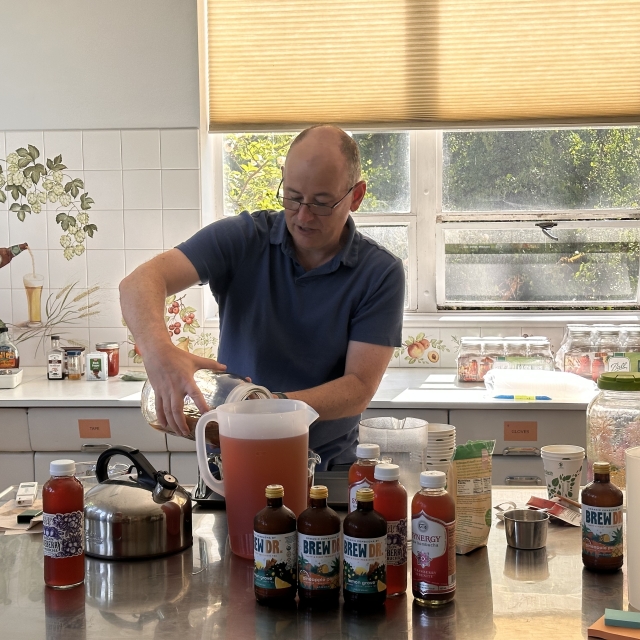
Fermentation Science blends biology, chemistry, and hands-on innovation to transform raw ingredients into products like beer, wine, cheese, yogurt, bread, pickles, and more. In this program, you’ll learn how microorganisms power sustainable, safe, and delicious food and beverage production around the world.
Whether you're driven by craft brewing, food entrepreneurship, or improving public health through fermentation, this degree prepares you for a wide range of careers in one of the industry’s most exciting and fast-growing areas.
Explore the many paths you can take with a Fermentation Science degree below:
Beverage Industry
Head Brewer / Assistant Brewer
- Oversees or assists in the brewing process
- including recipe development
- fermentation control and quality assurance.
Cider Maker / Mead Maker
- Specializes in fermenting fruit or honey-based beverages
- overseeing recipe creation and fermentation management
Distiller / Spirits Blender
- Produces distilled spirits such as whiskey or gin, often focusing on fermentation quality and flavor blending.
Fermentation Technician
- Operates and monitors fermentation equipment to ensure consistent product quality.
Quality Assurance / Quality Control (QA/QC) Specialist
- Tests raw materials and finished products to ensure safety and consistency in fermentation processes.
Production Manager
- Oversees daily operations, staff, and production timelines in beverage manufacturing plants.
Biotechnology & Industrial Applications
Industrial Fermentation Scientist
- Designs and optimizes fermentation processes for large-scale production of chemicals or bio-products
Pharmaceutical Fermentation Technician
- Operates fermentation equipment to produce drugs, antibiotics, or enzymes.
Research, Education, & Regulatory
Fermentation Research Scientist
- Conducts lab-based studies to explore microbial and biochemical aspects of fermentation.
University Faculty or Lecturer
- Teaches fermentation science topics and conducts research at academic institutions.
Food Safety Specialist
- Ensures compliance with food safety regulations in fermented food and beverage production.
Regulatory Affairs Associate
- Navigates food or beverage products through federal and state regulatory approval processes.
Technical Sales or Support (Fermentation Equipment / Cultures)
- Provides scientific product knowledge and technical help for fermentation equipment or ingredients.
Food Industry
Fermented Foods Scientist
- Develops and improves fermented food products using microbial and biochemical knowledge.
Product Developer
- Creates and tests new fermented food products for taste, shelf life, and safety.
Dairy Foods Technologist
- Specializes in dairy fermentation processes, overseeing product formulation and quality control.
Pickling / Canning Specialist
- Manages the fermentation or preservation of vegetables and fruits through pickling and canning processes.
Fermented Plant Based Foods
- Develops alternative protein and probiotic-rich fermented products from plant sources.
Industrial Fermentation Scientist
- Designs and optimizes fermentation processes for large-scale production of chemicals or bio-products
Pharmaceutical Fermentation Technician
- Operates fermentation equipment to produce drugs, antibiotics, or enzymes.
Fermentation Research Scientist
- Conducts lab-based studies to explore microbial and biochemical aspects of fermentation.
University Faculty or Lecturer
- Teaches fermentation science topics and conducts research at academic institutions.
Food Safety Specialist
- Ensures compliance with food safety regulations in fermented food and beverage production.
Regulatory Affairs Associate
- Navigates food or beverage products through federal and state regulatory approval processes.
Technical Sales or Support (Fermentation Equipment / Cultures)
- Provides scientific product knowledge and technical help for fermentation equipment or ingredients.
Contact us!
For more information about the FSST Undergraduate program, please contact:
Sue Queisser
Lead Academic Advisor
100 Wiegand Hall, Corvallis, OR 97331
P: 541-737-2590
Frequently Asked Advising Questions
To schedule a tour with the department, please contact:
Hailey Light
Student Recruitment, Outreach, & Marketing Coordinator
100 Wiegand Hall, Corvallis, OR 97331
P: 541-737-6483